

Stuck on an Elementor Import/Export Kit error? This guide walks through the most common import and export failures, what usually causes them, and the practical fixes that get kit transfers working again.
Use it when a kit will not upload, install, or export — including invalid zip files, PHP zip issues, server limits, timeouts, and plugin conflicts.
Quick checklist before you start
- Confirm the file is a
.zipkit (not a loose folder or auto-extracted archive). - Re-download the kit from the original source if the first download looks incomplete.
- Log in as a WordPress Administrator.
- Import only through Elementor's Import/Export Kit UI (not via FTP or Media Library workarounds).
- Check Elementor → System Info for Zip Installed, memory, and upload limits.
- Ask your host to raise upload, post size, memory, or PHP limits if the kit is large.
Common Import/Export Kit errors at a glance
| Error / symptom | Likely cause | Fix |
|---|---|---|
| Invalid file / Elementor template import not working | Wrong file type | Upload a .zip kit file |
| Corrupted file | Incomplete or damaged download | Re-download and import again |
| File too large / upload fails | Server upload size limit | Raise upload limits or contact host |
| Unauthorized / permission denied | Non-admin account | Log in with Administrator access |
| Upload outside the kit UI | File uploaded without the GUI | Import only through Elementor's kit interface |
| "PHP zip extension not loaded" | Zip extension missing | Enable PHP zip or ask your host |
| Memory / server error on import | Low PHP post size, upload, or memory | Increase PHP limits |
| Timeout during import | Process runs too long | Raise PHP Max Input Vars (and related limits) |
| Random import failure | Plugin conflict | Disable plugins, re-enable one by one |
| Export memory / timeout / zip errors | Same server limits on export | Raise memory, input vars, or enable PHP zip |
Troubleshooting common Import/Export Kit import errors
Kit import errors usually come from the file itself, your WordPress role, or server PHP limits. Work through the items below in order.
Elementor import template invalid file
Cause: Elementor template import is not working because the file format is not supported by Import/Export Kit.
Solution: Upload a kit with a .zip extension. Do not upload a folder, a .json page template (unless you are using the Templates library import for a single template), or a file your browser already unzipped.
Corrupted file error
Cause: The zip is damaged, incomplete, or interrupted during download.
Solution: Re-download the kit from a trusted source, confirm the zip opens on your computer, then run the import again with the fresh copy.
Server limitation on file size
Cause: Your host caps upload_max_filesize / related limits, so larger kits never finish uploading.
Solution: Increase upload limits in your hosting panel, or ask your provider to raise them. Then retry the import.
Unauthorized user error
Cause: Only Administrators can run Import/Export Kit actions.
Solution: Log out and sign in with an Administrator account (or an account that has full import privileges).
Non-GUI file upload error
Cause: Uploading the kit outside Elementor's Import/Export interface (for example, dropping files into the server manually) can break the process.
Solution: Stick to the built-in Import/Export Kit GUI so Elementor can validate and process the package correctly.
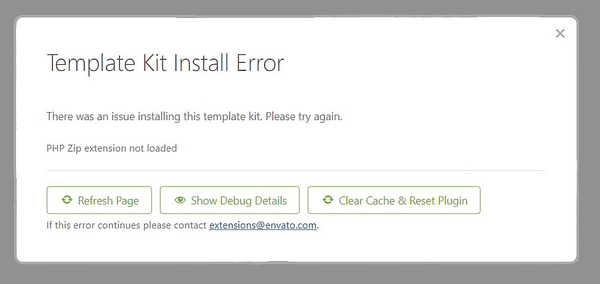
Server cannot handle zip files
Cause: The PHP zip extension is missing. You may see messages like "There was an issue installing this template kit. Please try again." or "PHP zip extension not loaded."
Solution: Enable the PHP zip extension in your host's PHP settings, or contact support to turn it on. In Elementor System Info, Zip Installed should read Yes.
Memory limitation on the server side
Cause: Large kits can exceed PHP memory, post size, or upload limits and trigger a server error.
Solution: Increase PHP Max Post Size, upload limits, and related memory settings. If you cannot change them yourself, ask your hosting provider.
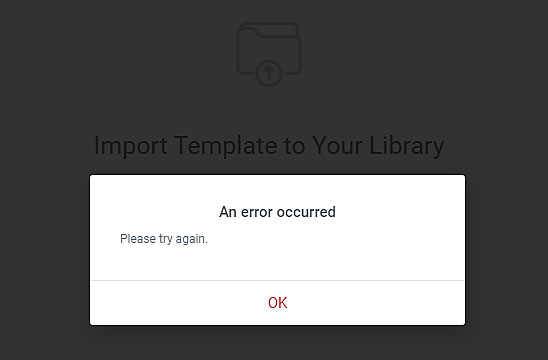
Timeout error during import
Cause: The import takes longer than the server allows.
Solution: Increase PHP Max Input Vars (and related execution limits if your host exposes them). Contact support if those settings are locked.
Plugin conflict error
Cause: Another plugin interrupts the import process.
Solution: Temporarily disable all plugins except Elementor (and Elementor Pro if you use it). Import again. If it works, re-enable plugins one by one until the conflict appears.
Export errors and possible solutions
Export failures are usually server-side. The same limits that break imports can also block kit exports.
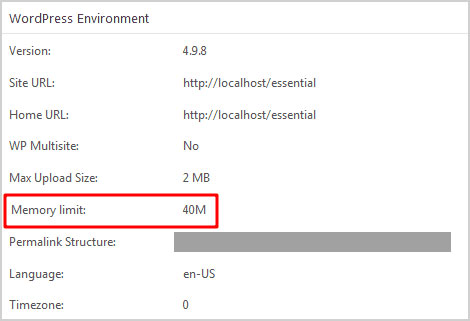
Memory limitation on the server side
Cause: Exporting a large kit uses more memory than the server allows.
Solution: Increase PHP memory limits, then export again. Ask your host if the panel does not expose the setting.
Timeout error during export
Cause: The export process runs longer than the server timeout window.
Solution: Increase PHP Max Input Vars, or ask your host to extend the time limit for long-running PHP requests.
Inactive PHP zip extension
Cause: PHP zip is disabled, so Elementor cannot build the export archive.
Solution: Install or enable PHP zip on the server. This configuration change usually resolves the export failure.
Import/Export issues caused by third-party plugins
Elementor's Import/Export tool mainly moves default Elementor features and settings. Widgets or content from third-party add-ons — especially plugins with complex settings or database-linked content — may not transfer cleanly and can trigger import errors.
If your kit depends on third-party plugin content:
- Install required plugins first on the destination site before importing.
- Re-export a cleaner kit from the source site after temporarily deactivating third-party Elementor add-ons, then test that import.
- Isolate the conflict. If the clean kit imports successfully, migrate the add-on-specific data separately after the core kit is in place.
How to import an Elementor template kit (quick path)
- Get the template kit as a
.zipfrom a trusted source or library. - In WordPress, go to Elementor → Tools → Import/Export Kit (or use Templates → Import Templates for single template files, depending on your workflow).
- Choose the
.zipand start the import. - After it finishes, open the imported templates or pages in the Elementor editor and review global styles, menus, and required plugins.
If you are hitting Kit Library preview or install errors instead of Import/Export Kit failures, see common Elementor Kit Library errors.
Final tips
- Keep Elementor, Elementor Pro, WordPress, and PHP updated within your host's supported range.
- Prefer a fresh zip download over reusing an old local copy.
- When in doubt, check System Info, raise PHP limits, and test with other plugins disabled.
- Keep your hosting provider's support channel handy for zip, memory, and upload changes you cannot edit yourself.
Want more Elementor widgets and layout options after your kit is imported? Explore Element Pack Pro for addons built for Elementor sites.
Frequently Asked Questions
How to import a template kit in Elementor?
Open the Templates library, click Import Templates, choose the kit, and click Import Now. When the import finishes, use the templates inside the Elementor editor.
How to export and import an Elementor page?
Open the page in Elementor, open settings, choose Save as Template, and save it. On the destination site, open the Templates library, click Import Templates, select the template file, and click Import Now.
How do you recognize errors when importing a kit or list?
Watch for on-screen notifications, warnings, or admin messages. Typical signals include missing data, wrong formatting, permission errors, zip failures, or conflicts with existing content. Review the message carefully and check any available import log before retrying.
How to import a JSON file in Elementor?
Open the page in Elementor, open the Templates library from the folder icon, choose Import Templates, select the JSON file, and click Import Now. Then insert the imported template where you need it.
How to overcome Elementor import errors?
- Check file format: If Elementor failed to process the zip, confirm the file is a valid template kit zip.
- Verify integrity: Re-download if the archive looks incomplete or corrupted.
- Increase server limits: Raise upload size, post size, and memory when kit import is not working.
- Check permissions: Use an Administrator account for "Permission Denied" errors.
- Use the right interface: Import through Elementor's designated Import/Export or Templates UI only.
How to fix a template kit install error?
If you see "There was an issue installing this template kit. Please try again" or "Please upload a valid template kit zip file":
- Confirm the kit is compatible with your WordPress and Elementor setup.
- Re-download the zip and verify it is not corrupted.
- Install required plugins before importing.
- Increase the PHP memory limit for large kits.
- Clear browser cache and any caching plugins, then try again.
How to import an Elementor template kit successfully?
- Download the kit as a
.zip. - Log in to WordPress and go to Elementor → My Templates.
- Click Import Templates.
- Select the downloaded
.zip. - Click Import Now, then edit the templates in Elementor.
Still stuck on Kit Library issues? Read the common Elementor Kit Library errors guide.

Senior Content Strategist & Editor, BdThemes